
When it comes to construction, tilt-up building methods might just be the superhero of the industry. Imagine a world where walls spring to life like magic, rising from the ground in record time. That’s the essence of tilt-up construction, where concrete panels are cast on-site and then tilted into place. It’s efficient, cost-effective, and let’s be honest—who doesn’t love watching a building go from zero to sixty in no time?
Overview of Tilt Up Building Construction
Tilt-up building construction offers an efficient method for erecting structures quickly. This technique involves creating large concrete panels at the construction site, allowing for seamless integration of materials. After the panels cure, cranes lift and position them vertically to form walls. The process is characterized by its speed; buildings can reach completion in weeks, compared to traditional methods that may take months.
Cost-effectiveness plays a significant role in the popularity of tilt-up construction. Reduced labor requirements and fewer materials contribute to overall savings. Many developers choose this method due to lower costs and shorter project timelines. Environments best suited for tilt-up construction include commercial buildings, warehouses, and retail spaces, where expansive interiors are beneficial.
Quality control is crucial in tilt-up projects. On-site fabrication allows for consistent quality in concrete panels, minimizing defects. Advanced technology aids in the precision of measurements and settings during the lifting process, ensuring structural integrity. Engineers often design for future flexibility, accommodating potential expansions or modifications easily.
Sustainability is another advantage associated with tilt-up construction. The methodology encourages the use of locally sourced materials, reducing transportation emissions. Additionally, energy-efficient designs can be integrated into tilt-up structures, capitalizing on natural light and thermal mass.
Overall, tilt-up building construction combines speed, cost-efficiency, quality, and sustainability. This method has transformed the way commercial structures are built, allowing for robust designs with minimal environmental impact.
Benefits of Tilt Up Building Construction
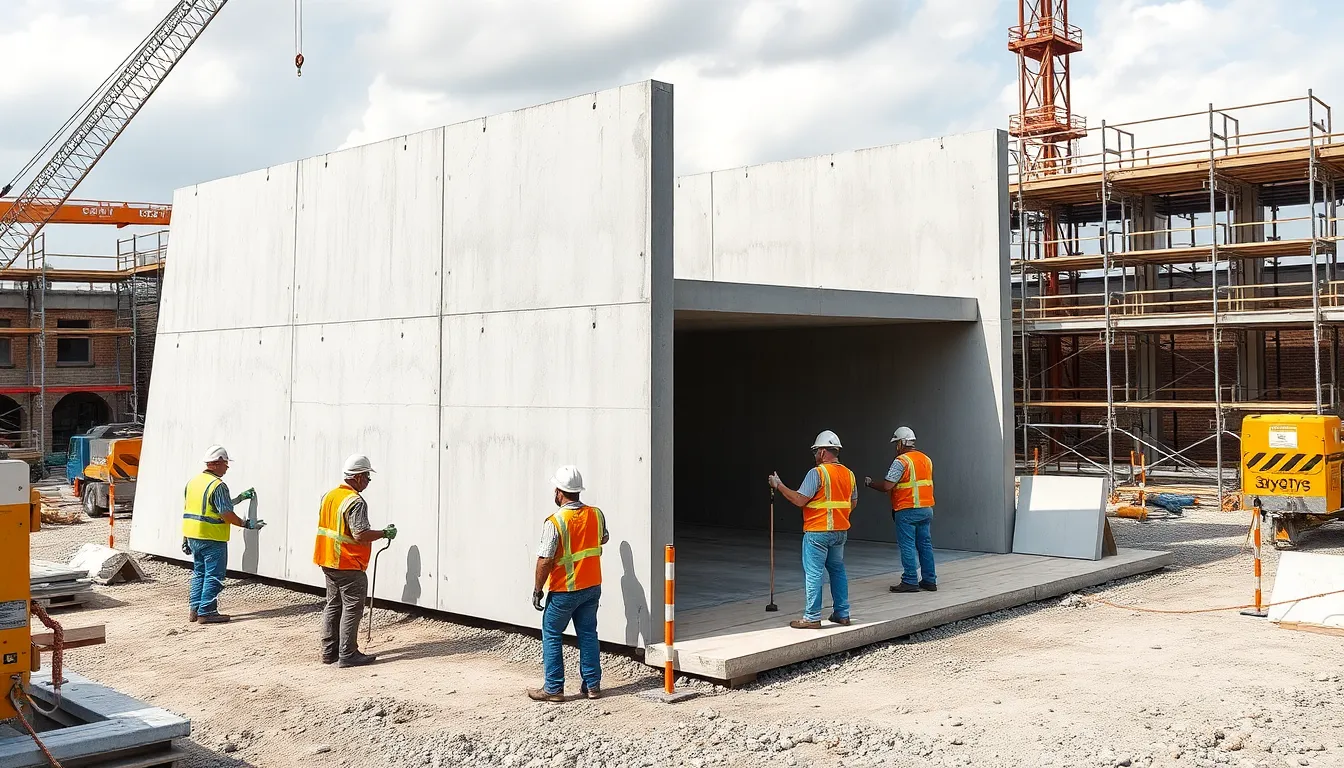
Tilt-up construction offers several notable advantages that enhance its appeal to developers and builders. This method stands out due to its versatility in various applications, such as commercial and industrial projects.
Cost Efficiency
Cost efficiency represents a primary benefit of tilt-up construction. Reduced labor expenses arise from the simplified assembly process. Fewer workers are required on-site due to the method’s quick execution. Furthermore, local sourcing of materials minimizes transport costs, adding another layer of savings. The streamlined construction process often leads to lower overall project budgets, which appeals to developers seeking financial viability. Projects typically see savings of up to 20% compared to traditional methods, enhancing profitability and making it an attractive option for investors.
Speed of Construction
Speed of construction ranks high among the benefits of tilt-up building methods. Many projects complete in mere weeks, significantly faster than conventional techniques. Quick panel fabrication allows for immediate positioning, accelerating overall project timelines. This rapid pace enables businesses to occupy facilities sooner, translating into increased operational efficiency. Additionally, faster completion times mean reduced financing periods, contributing to substantial savings. Developers appreciate this speed, meeting market demands promptly while maximizing returns.
Key Considerations in Tilt Up Building Construction
Tilt-up building construction presents various essential factors to ensure successful project execution. Attention to site-specific variables significantly impacts efficiency and outcomes.
Site Selection
Site selection is critical in tilt-up construction. A level and stable site promotes effective panel installation, reducing complications during the lifting process. Proximity to suppliers facilitates timely access to materials, minimizing delays. Evaluating local zoning regulations ensures compliance with building codes, preventing costly adjustments later. Additionally, assessing soil conditions determines foundational requirements, impacting overall stability and strength. Environmental factors like weather patterns can influence project timelines, making thorough analysis crucial for effective planning.
Design Flexibility
Design flexibility stands out as a hallmark of tilt-up construction. Customizing wall heights and thickness accommodates diverse architectural styles. Incorporating various finishes enhances aesthetic appeal while meeting specific performance criteria. Multiple openings for doors and windows can integrate easily, allowing for tailored functionality. This method supports innovative designs while maintaining structural integrity, resulting in distinctive commercial spaces. Collaboration with architects and engineers during the design phase fosters creativity without compromising the construction timeline. Flexibility in modifying plans ensures alignment with client visions and operational needs, reinforcing project success.
Challenges in Tilt Up Building Construction
Tilt-up construction presents unique challenges that project managers must navigate to ensure successful outcomes. Identifying potential issues early on can significantly minimize disruptions.
Weather Impact
Weather influences tilt-up construction timelines and operations. Rain, snow, or extreme temperatures can impede concrete curing and tilt-up panel installations. For instance, cold weather can delay the setting time of concrete, extending overall project duration. Heat can increase evaporation rates, leading to cracking in panels. Planning around seasonal weather patterns is critical to maintaining schedules and avoiding costly overruns. Utilizing weather forecasts effectively allows teams to prepare adequately and adjust work hours accordingly.
Inspections and Regulations
Adhering to inspections and regulations is essential in tilt-up construction. Each project requires compliance with local building codes & safety standards, which can vary widely. Typically, multiple inspections occur at various stages, from panel fabrication to final erection. Failure to meet these regulatory requirements may result in fines or project delays. Keeping open communication with local authorities ensures that all permits are in place before construction begins. Proactive engagement with inspectors can streamline the approval process and enhance project flow.
Future Trends in Tilt Up Building Construction
Innovation drives the evolution of tilt-up construction methods. Advanced technologies such as Building Information Modeling (BIM) increasingly enhance designing and planning processes. Utilization of drone technology for site monitoring and inspections improves accuracy and efficiency.
Sustainability becomes a priority with eco-friendly materials gaining traction in the industry. Many developers increasingly opt for recycled materials in panel production to minimize environmental impact. Energy-efficient building designs also play a vital role, reflecting a growing trend towards green construction practices.
Automation in construction continues to grow, streamlining processes. Robotic systems help with lifting and positioning concrete panels, reducing labor costs and enhancing safety on job sites. This trend not only improves project timelines but also allows for higher precision during installations.
Customization options expand as clients seek unique architectural features. Lean construction techniques also gain recognition, focusing on minimizing waste and maximizing value throughout the building process. Enhanced collaboration among architects, engineers, and contractors fosters creativity and innovation.
Shift toward urbanization drives demand for multi-story tilt-up structures. Building higher becomes necessary in densely populated areas where land availability is limited. Developers respond by adapting tilt-up methods to accommodate vertical expansion.
Regulatory compliance becomes essential as building codes evolve. Staying updated on local regulations can minimize delays during construction. Engaging local authorities early in the planning stages ensures a smoother approval process.
Investment in workforce training increases, addressing the skills gap in the construction industry. Focus on training programs enhances overall safety and efficiency on-site. As tilt-up construction continues to develop, these trends will shape its future, making it an even more viable building option.
Tilt-up construction stands as a transformative approach in the building industry. Its ability to combine speed and cost-effectiveness makes it an attractive option for various commercial projects. As technology continues to advance, the integration of innovative methods will likely enhance the efficiency and sustainability of this technique.
Emphasizing quality control and design flexibility, tilt-up construction meets diverse architectural needs while minimizing environmental impact. By addressing the challenges and adapting to future trends, this method is poised to redefine how structures are built in an ever-evolving landscape. The future looks bright for tilt-up construction, promising exciting developments that will shape the industry for years to come.

