
In today’s fast-paced world, who wouldn’t want a home that anticipates their every need? Imagine walking in after a long day, and your lights flicker on, the thermostat adjusts to your perfect temperature, and your favorite playlist starts playing—all without lifting a finger. Welcome to the world of home automation, where convenience meets innovation, and the only thing you’ll need to do is sit back and enjoy the show.
The home automation business is booming faster than a cat video going viral. Homeowners are embracing smart technology to simplify their lives, save energy, and even impress their guests. With endless possibilities from smart lighting to voice-activated assistants, this industry is not just a trend; it’s a lifestyle revolution. So, whether you’re a tech-savvy guru or just someone who likes to control the TV with a remote, there’s something in this automated paradise for everyone.
Overview of Home Automation Business
Home automation represents a booming industry focused on integrating technology within residential environments. This sector covers diverse products and services, including smart lighting systems, temperature controls, security devices, and entertainment solutions. Homeowners prioritize convenience, which drives adoption rates of these innovative technologies.
Statistics indicate that the global home automation market reached approximately $80 billion in 2022. Projections for 2028 suggest it could grow to over $150 billion, reflecting significant demand for automated solutions. Energy efficiency stands out as a compelling selling point, as automated systems can optimize energy usage and reduce utility costs.
Security features also play a crucial role in this business. Surveillance cameras, smart locks, and motion detectors help homeowners monitor their properties and respond to potential threats. Customers appreciate the peace of mind these tools provide, which enhances their overall quality of life.
Tech-savvy generations contribute to market expansion, as younger consumers gravitate toward smart home technology. These individuals often seek customizable systems that fit their unique lifestyles. Additionally, partnerships between tech companies and traditional homebuilders are becoming more common, making automated features an integral part of new constructions.
Professional installation services represent another vital aspect of the home automation business. Many homeowners prefer expert assistance to ensure proper setup and functionality of complex systems. This trend has led to increased job opportunities in installation, maintenance, and support services, further fueling the industry’s growth.
Innovation continues to drive advancements in home automation. Emerging technologies, such as artificial intelligence and machine learning, enable smarter homes that learn user preferences. Homeowners benefit from an increasingly intuitive experience, adapting systems to enhance comfort and efficiency, which cements home automation as a fundamental aspect of modern living.
Benefits of Home Automation
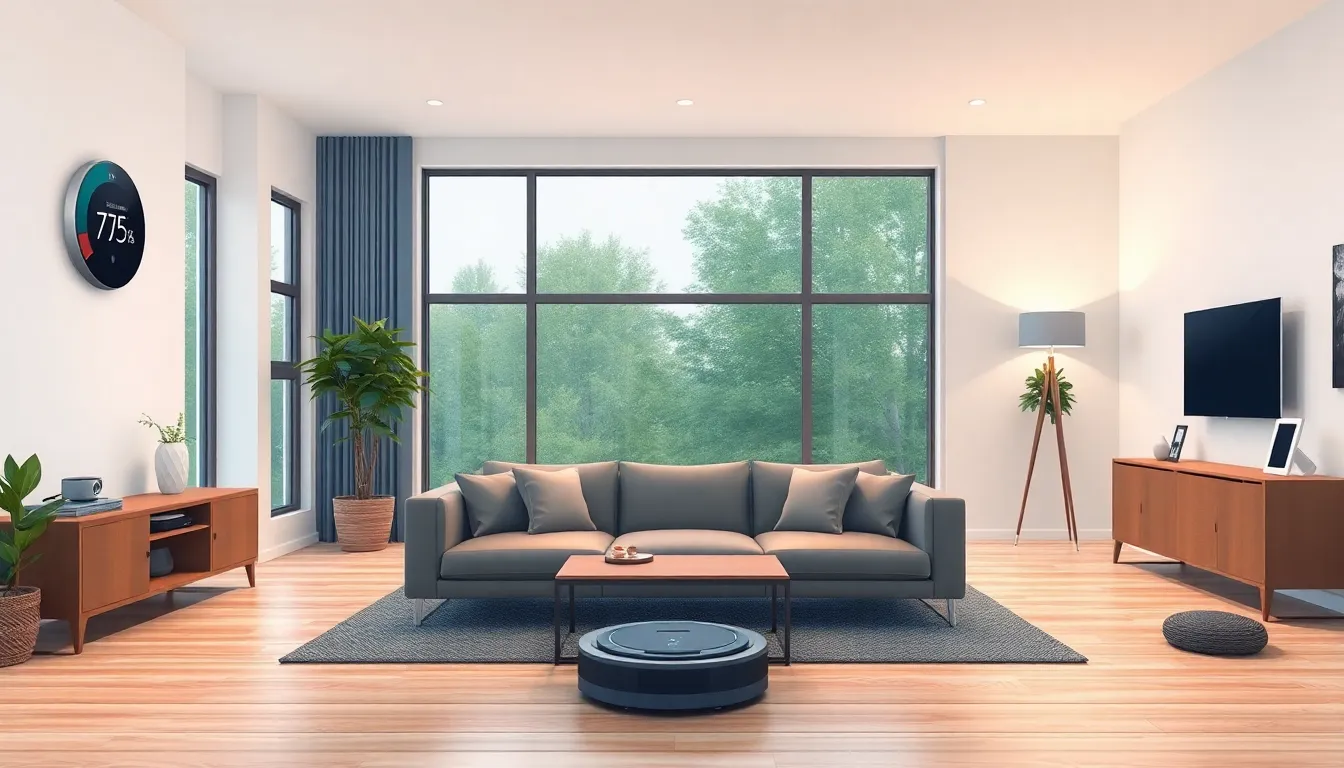
Home automation provides myriad benefits that significantly impact daily life. Enhanced convenience is one of its primary advantages, simplifying tasks and improving overall efficiency.
Increased Convenience
Home automation significantly increases convenience for homeowners. Devices can be programmed to perform tasks automatically or through voice commands. Smart lighting adjusts based on the time of day, reducing effort when entering rooms. Homeowners remotely control heating and cooling systems, ensuring comfort upon arrival. Additionally, automated systems streamline household chores, like scheduling robotic vacuums, for hassle-free cleaning.
Enhanced Security
Enhanced security features stand at the forefront of home automation benefits. Smart security systems offer real-time alerts and remote monitoring of premises via smartphones. Integrating surveillance cameras allows homeowners to check on properties while away. Motion detectors quickly alert the homeowner of any unusual activity. Smart locks provide an added layer of protection, enabling secure keyless entry and the ability to grant access remotely. This added security not only safeguards homes but also provides peace of mind for families.
Types of Home Automation Systems
Home automation systems encompass various technologies designed to enhance convenience, security, and energy efficiency. Popular categories include smart lighting solutions and climate control systems.
Smart Lighting Solutions
Smart lighting solutions allow users to control their home’s lighting remotely. Innovative technologies enable homeowners to set schedules for lights or adjust brightness and color via apps. Various products include smart bulbs, switches, and sensors that respond to movement or voice commands. Energy savings become apparent with features that automatically turn off lights when rooms are unoccupied. Additionally, integration with other smart devices creates a cohesive environment for entertainment or relaxation. Homeowners increasingly prefer these solutions for their flexibility and convenience.
Climate Control Systems
Climate control systems optimize home heating and cooling for comfort and energy efficiency. Programmable thermostats allow homeowners to set temperatures based on daily routines, while smart vents adjust airflow for individual rooms. Many of these systems can be controlled remotely through mobile applications, providing convenience for adjusting settings on the go. Enhanced efficiency contributes to lower utility bills, making these systems financially attractive. Some advanced models utilize sensors to learn household patterns, optimizing energy use and maintaining comfortable environments. Homeowners find significant value in climate control systems that adapt to their lifestyles.
Challenges in the Home Automation Industry
Home automation faces several significant challenges that can hinder its growth and adoption. These issues span across technology, market dynamics, and user experience.
Technological Barriers
Technological barriers pose substantial challenges in home automation. Interoperability issues arise when devices from different manufacturers fail to communicate seamlessly, creating a fragmented user experience. Connectivity problems can disrupt the operation of smart devices, leading to frustration among users. Furthermore, security vulnerabilities threaten user data and privacy, raising concerns about hacking and unauthorized access. Manufacturers must prioritize developing standardized protocols to address these challenges. As a result, reliable, secure, and compatible systems can enhance user confidence in home automation technology.
Market Competition
Market competition in the home automation industry intensifies as new players continually enter the field. Established companies face pressure from startups that introduce innovative products and solutions aimed at attracting tech-savvy consumers. Differentiation becomes crucial as brands strive to offer unique features and superior performance. Price competition further complicates the landscape, forcing companies to balance affordability and quality. Marketers focus on educating consumers about the benefits of advanced automation to stand out. Companies that successfully navigate these challenges benefit from a loyal customer base in a rapidly evolving marketplace.
Future Trends in Home Automation
Home automation continues to evolve, offering innovative solutions that cater to modern lifestyles. Emerging technologies such as artificial intelligence and the Internet of Things drive the next wave of advancements.
Integration with AI and IoT
Artificial intelligence and IoT will significantly enhance home automation systems. Machine learning algorithms allow devices to learn from user behavior, optimizing functions based on individual preferences. Homeowners benefit from an integrated ecosystem where devices communicate seamlessly with one another. For instance, smart thermostats adjust temperatures based on daily routines while security cameras learn to identify familiar faces. Systems designed with AI capabilities not only anticipate needs but also improve efficiency over time, making them more valuable in a smart home landscape.
Customization and Personalization
Customization and personalization are becoming essential trends within home automation solutions. Homeowners increasingly seek tailor-made experiences that reflect their unique lifestyles. Customizable systems allow users to create specific settings for lighting, temperature, and entertainment based on personal preferences. For example, many platforms offer extensive options for configuring routines and automating tasks like morning wake-up scenes or movie nights. Personalized features enhance user satisfaction and engagement, making automated solutions more appealing in a market poised for growth.
Home automation is reshaping the way people live by offering unprecedented convenience and security. As the industry continues to grow rapidly, homeowners are increasingly embracing smart technologies that enhance their lifestyles. The integration of AI and IoT is paving the way for more intuitive systems that adapt to individual preferences.
While challenges like interoperability and security remain, the potential for innovation keeps the market dynamic. As more consumers seek customized solutions, businesses that prioritize user-friendly experiences and reliable technology will thrive. The future of home automation looks bright, promising a smarter and more efficient living environment for everyone.

